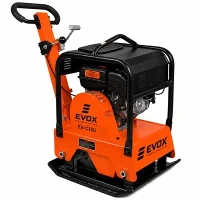

Flat surface compaction: Suitable for compacting level surfaces, such as site grading and public squares.
Sloped surface compaction: Capable of compacting slopes or inclined surfaces.
Step compaction: Used for compacting stepped areas at construction sites.
Trench and pit compaction: Suitable for compacting narrow or irregularly shaped spaces, such as trenches and pits.
Corner compaction: Used for compacting corners and edges that are difficult for large compaction equipment to reach.
Bridge abutment backfill compaction: Used during bridge construction to compact fill material behind the abutment.
Plate compactors are particularly well-suited for compacting materials with low inter-granular cohesion and friction, such as river sand, crushed stone, and asphalt. They are also effective for compacting cohesive or non-cohesive soils, provided the crushed stone content does not exceed 30%. In practice, plate compactors are commonly employed in sectors such as highway construction, municipal engineering, building construction, and water conservancy projects to ensure the stability and load-bearing capacity of foundation structures.